Supplements for BJJ: What Works and What Doesn’t
Most supplements won’t make you better at BJJ. A few are worth it: creatine monohydrate, caffeine and, for some people, whey protein, electrolytes, and/or beta-alanine. The rest is mostly marketing. I’m a registered dietitian and a BJJ black belt, and this is what I tell the people I coach about what to take, how much, and what to skip.
Do you need supplements at all?
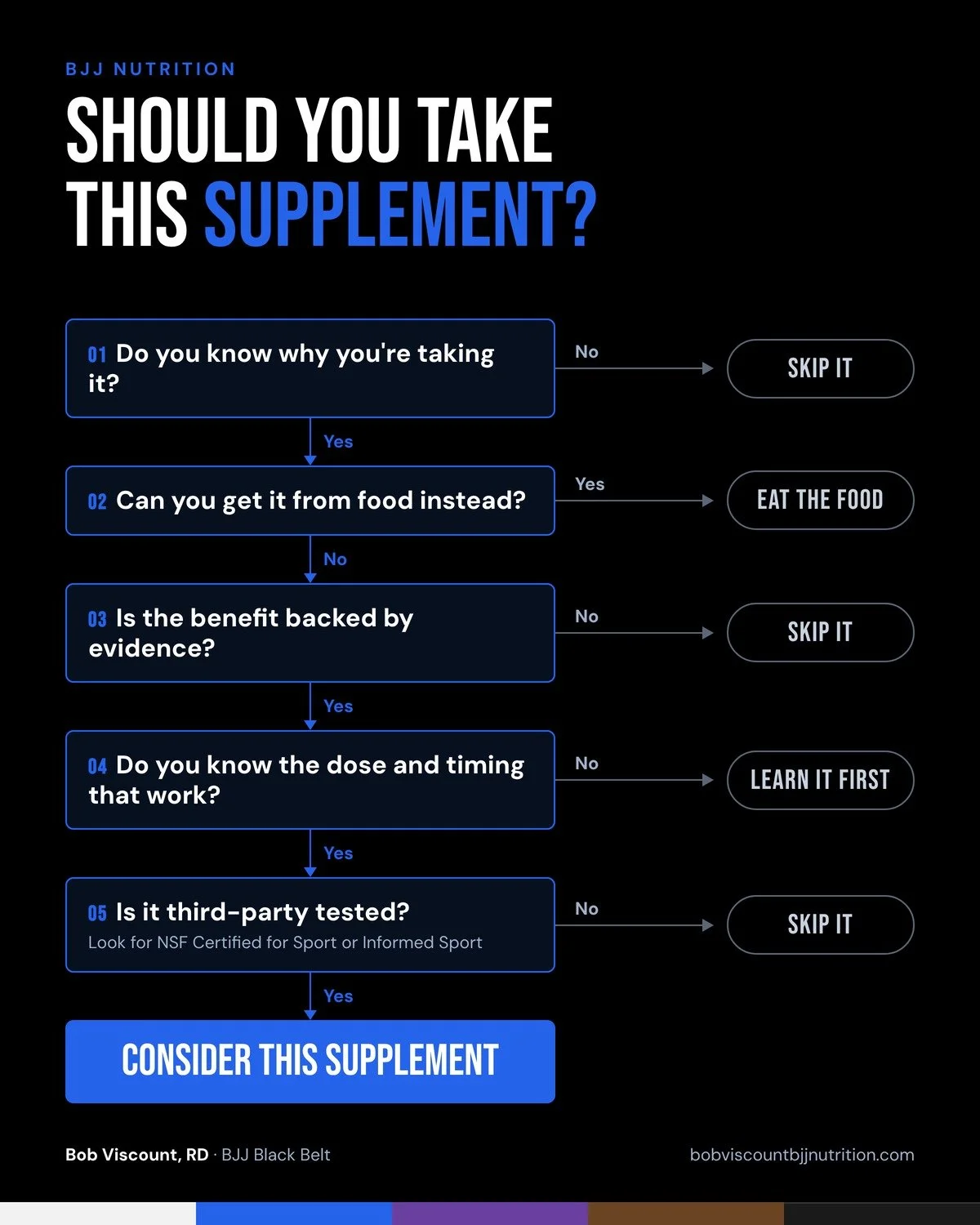
I have a decision tree that I use with athletes when supplements come up. I’d go through this first. Also, this blog post is intended for adults (ages 18 and older). You should consult your doctor before taking any supplements, especially if you take other supplements or medications already.
Creatine Monohydrate
Creatine monohydrate is the most common supplement used by athletes. It is a compound made from amnio acids that is stored in our muscles. We get creatine from food, like animal meats. However, our creatine stores have some extra room beyond what we can reasonably fill from food. This is why supplementing with creatine monohydrate can be useful. It increases intramuscular creatine stores by as much as 30%. This helps your body rapidly replenish phosphocreatine stores during high-intensity movements. Translation = you can get an extra rep, more explosive power, a little bit more weight on your barbell, etc…
Creatine is proven safe and effective at a standard dose of 3-5 g per day. Timing is pretty much irrelevant, so focus on taking creatine every.single.day. Consistency is what matters. This means training days, off days, and everything in between. There’s no need to cycle it or go through a loading phase (taking 4 doses of 5 g per day for 5-7 days to reach the saturation point quicker). Creatine monohydrate taken at 5 g/day will likely take 4 weeks to fully saturate your muscle stores. This isn’t pre-workout, so don’t expect some huge burst when you start taking it.
Some users note a small gain in weight initially (1-3 lbs can be expected), however this is due to increased water retention in your muscles. It’s also not that puffy looking extra water weight. Think swole.
In short, creatine monohydrate can help with explosive movements in BJJ. Think shooting for a double leg or a scramble. Creatine monohydrate helps fuel very quick bursts of energy.
Recommendation from Bob: HELL YES
Caffeine
Caffeine is the most commonly used drug in the world. When used appropriately (I’ll get into what that means), it can help with perception of effort, fatigue, and even pain. It’s also important to understand caffeine in the context of energy. Caffeine is a stimulant. It works by blocking an adenosine receptor in your body, which prevents you from being tired. Note the difference between preventing you from feeling tired and providing actual energy (which your body converts to ATP for things like movement). This is not to say that caffeine is bad, but I want to underscore the importance of not relying on this in isolation or without properly eating/drinking.
Optimal dosing is 3-6 mg per kilogram of body weight before training. So if you weight 90 kilograms, that’s anywhere between 270-540 mg/day. Honestly, I’d cap your daily caffeine intake at 400 mg/day to stay aligned with the FDA’s recommendations. If you’re new to caffeine, start slow. I’d start with small doses, basically the equivalent of an 8 oz cup of coffee (~100 mg of caffeine if brewed at home - much more if you go to Starbucks). If you get your caffeine from energy drinks, be sure to read the label so you understand how much you’re consuming. Red Bull is on the lower end at 80 mg/can, while things like Ghost and Monster can be 200+ mg/can.
Side effects can vary, and remember, caffeine is a stimulant. Noted adverse effects include insomnia, poor sleep quality, and feeling shaky or getting the jitters. A helpful tip is to stop your caffeine consumption at least 6 hours before bed to help mitigate any sleep issues. Keeping the dose small and gradually increasing it (if needed) is advised.
Caffeine peaks 45-60 minutes after consumption (via a liquid like coffee), so I’d plan to take it 45-60 minutes before BJJ to get the most out of it.
Recommendation from Bob: Yes, if you tolerate it (meaning no adverse effects - especially impacting sleep)
Whey Protein
Whey protein is a milk protein. It’s used as a dietary supplement, and it might help you reach your daily protein goals. One of the things that makes whey protein so helpful for athletes is that it is very high in the amino acid leucine. Proteins are made up of amino acids, and there are 20 of them. Our body makes 11, and 9 need to come from food (called ‘essential amino acids). If a protein source has all 20 amino acids, it’s called a ‘complete protein’. Whey is a complete protein, and the amino acid leucine is what triggers muscle protein synthesis. So if you are weight training, this could be helpful. Of course, many protein sources contain leucine, so this is not the only option.
Whey offers convenience (typically it’s in a powder and easy to transport), great taste, and is a high-quality protein source. Most whey comes in serving sizes or scoops that offer 25-30 g of protein, and this is a perfect amount of protein to aim for when eating a meal or snack.
That being said, it’s also an extra expense. Do you need to take whey protein? Absolutely not. Can it help if you need a boost to meet your daily protein needs or a convenient protein source on the go? You bet your ass.
Finally, since whey is a dairy product. If you have a dairy allergy, avoid it. If you’re lactose intolerant, whey isolate is often tolerated. For example, whey concentrate may lead to a stomachache stomachache, while whey isolate does not. You might need to try a few different types of whey along with brands to find one that works for you.
Recommendation from Bob: Yes, presuming you tolerate dairy and don’t mind the expense
Electrolytes
The rise in electrolyte powders and their ads may make you feel like you need electrolyte powders to be adequately hydrated. I want to start this section by being very clear: most people do not need an electrolyte powder. The main reason is that these are loaded with sodium (500-1,000 mg is common in a single packet). The recommended daily LIMIT for sodium is 2,300 mg. The average American consumes of 3,500 mg/day. What this means is that we (the collective ‘we’) get more than enough sodium through diet already (too much, in fact). Too much sodium can lead to things like high blood pressure. Not good.
Why sodium? The main electrolyte lost in sweat is sodium. So when you lose this electrolyte, it can be helpful in certain situations to replenish it with a supplement.
Here are certain situations where an electrolyte powder may be a good idea for a BJJ athlete:
In hot, humid environments. Think Florida in the summer. You may need one after 60 minute class + 30 minutes of sparring, especially when wearing a gi.
You’re a heavy sweater. Most people think that’s them. Update: it probably isn’t. You can check your sweat loss by using a scale before and after training. Be sure that if you are wearing a gi when you step on the scale, you wear it after training as well. If you don’t wear a gi on the scale or train no-gi, then weigh without the gi. The difference in your body weight is water loss. Sorry homie, you didn’t lose 5 lbs of fat training BJJ that session. To be considered a heavy sweater, this is measured in liters of fluid lost per hour, and a heavy sweater is >2.0 L/hr. This requires some math, so if you’re not sure, this is something I could help you calculate as a client.
Long training sessions. We’re talking 90 minutes minimum here.
Multiple daily sessions. If you’re training a few times a day, your sweat loss may add up.
Fun fact, coconut water is often listed as great for hydration. However, it’s quite low in sodium. It’s high in potassium. Potassium is great, and your body needs it. However, if you have a lot of sweat loss, I would not rely on coconut water to rehydrate.
While we’re on hydration, a good tip to ensure you’re hydrated is to look at your pee. You want it to be a pale yellow color. That’s a good sign that you’re hydrated.
Recommendation: Likely no, unless you fit a scenario above
Beta-alanine
Beta-alanine works as an intracellular buffer by increasing carnosine content. This supplement is particularly helpful for high-intensity athletic activities lasting between 30 seconds and 10 minutes. Perfect for a typical BJJ round. You can think of it as something that can help you work through that burning feeling when you’re getting after it.
Dosing is 3.2-6.4 g per day, and just like creatine monohydrate, you want to take this every day. It may take 4 weeks to fully build up in your system, so don’t expect instant results.
A common side effect is paresthesia, or a tingling feeling often felt in the face or hands. It can be unpleasant for some. You can try to mitigate this by taking a split dose (half in the AM and half in the PM).
Recommendation: Yes, if you tolerate it without bothersome side effects
Third-party testing
Lastly, if you choose to take a supplement, look for third-party testing. Companies like National Sanitation Foundation (NSF) and LGC (Informed Sport, Informed Choice) do this in the US. Supplement companies that have this usually carry something on the bottle/package that notes this. If you’re unsure, I’d contact the supplement company to ask. This helps ensure what you think is in the package is actually in the package. Plus, if you’re a pro or college athlete and subject to drug testing, this is a helpful way to avoid getting popped for taking something you didn’t know you were taking.
Help With Supplements
If you’re looking for individual help for supplements, I can help. I’m a Registered Dietitian, and I’ve worked with dozens of athletes. You can sign up for a free Discovery Call to see if I might be a good fit.
ABOUT THE AUTHOR
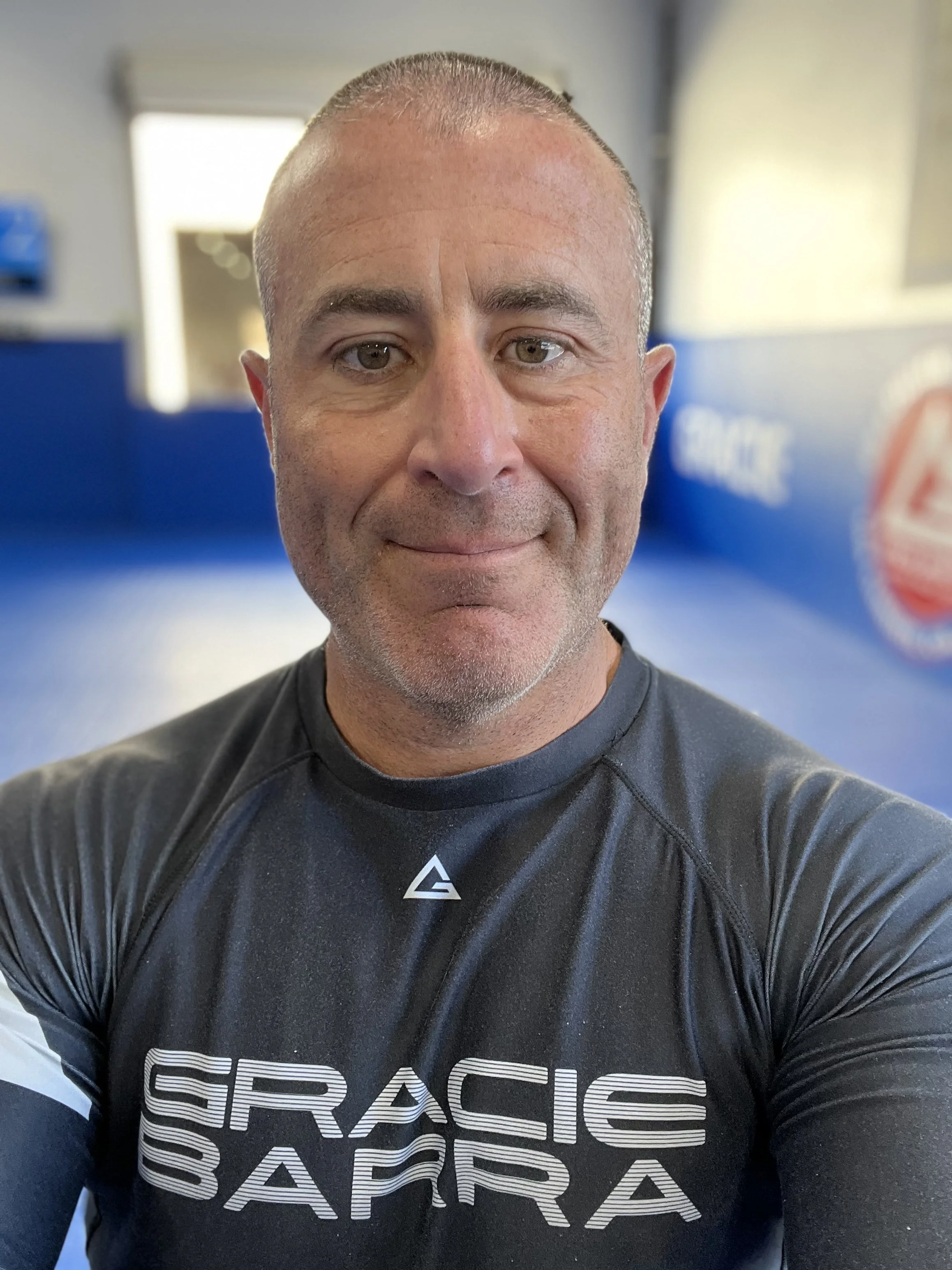
I’m Bob Viscount, a Registered Dietitian and BJJ black belt who’s been training since 2011. I teach at Gracie Barra San Clemente and coach BJJ athletes online who want to perform better, recover faster, and make weight without wrecking themselves. Most of my clients are regular people with full-time jobs who train a few times a week, so everything I teach has to work in real life.